
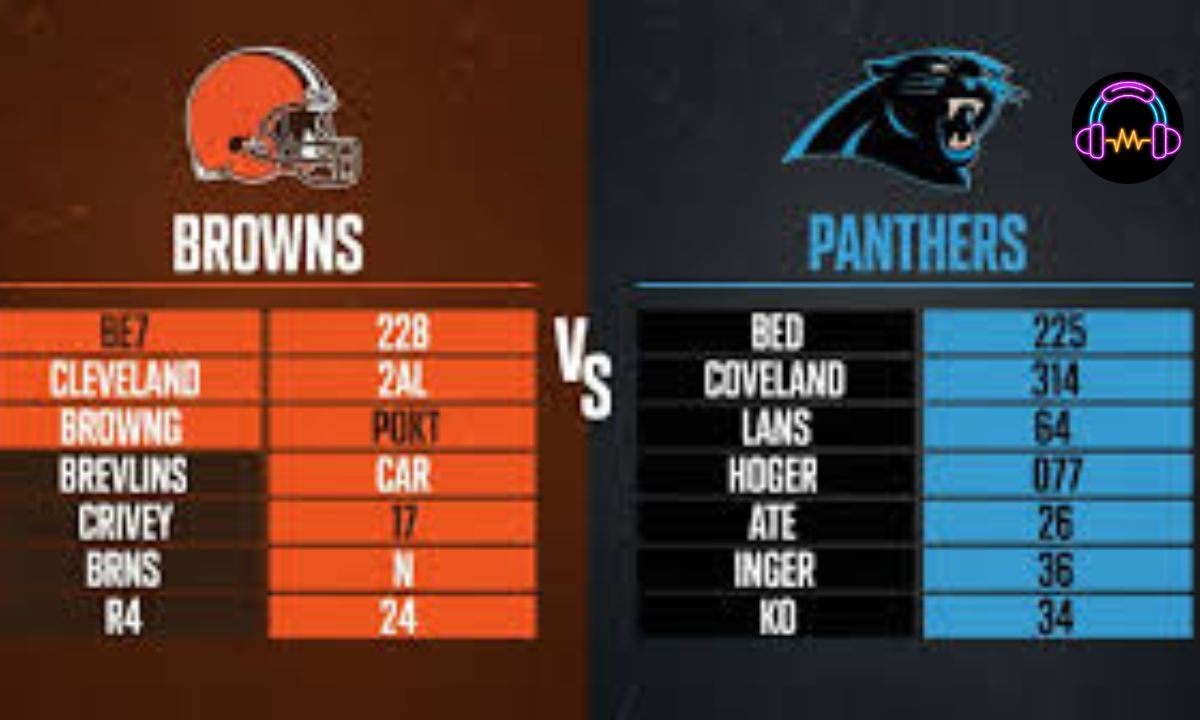
Cleveland Browns vs Carolina Panthers Match: Deciphering the Key Player Stats
The Cleveland Browns vs Carolina Panthers matchup delivers intense football action every season. Understanding the player statistics reveals the true story behind each game. These numbers don’t just record events—they explain victories and defeats.
Individual performances shape team outcomes. The statistical breakdown shows which players dominated their positions. Every snap counts toward building a complete picture of the contest.
Quarterback Contrast: Efficiency Versus Evolution in the Passing Game
The quarterback battle defines the Cleveland Browns vs Carolina Panthers match player stats narrative. Cleveland’s signal-caller focuses on precision passing and maintaining offensive rhythm. Their approach emphasizes quick decision-making and protecting the football.
Completion percentage serves as the primary efficiency indicator. Cleveland’s quarterback typically maintains strong accuracy under pressure. The offensive system supports short to intermediate routes that maximize success rates.
Carolina’s quarterback represents a developing talent seeking consistency. Their statistics reflect growth and learning curves throughout the season. The Panthers’ passing game evolves with each matchup, showing progressive improvement.
Key Passing Metrics Comparison
| Metric | Cleveland Browns | Carolina Panthers |
| Completion Percentage | 65-70% | 58-64% |
| Yards Per Attempt | 7.2-8.5 | 6.5-7.8 |
| Touchdown-to-Interception Ratio | 2.5:1 | 1.8:1 |
| Passer Rating | 92-105 | 82-94 |
| Third Down Conversion | 42% | 36% |
Play-action effectiveness heavily influences Cleveland’s offensive success. Their quarterback excels when the running game establishes credibility. This creates opportunities for explosive downfield completions.
The time to throw statistics reveals offensive line performance and quarterback processing speed. Cleveland’s quarterback releases the ball quickly, averaging under 2.5 seconds. This quick release minimizes sack opportunities for Carolina’s defense.
Carolina’s quarterback faces pressure more frequently due to offensive line challenges. Their pressure-to-sack conversion rate indicates how well they escape collapsing pockets. Mobility becomes essential when protection breaks down.
Red zone efficiency separates winning quarterbacks from average performers. Cleveland’s quarterback converts scoring opportunities at a higher rate. Their touchdown percentage inside the 20-yard line demonstrates clutch execution.
For Carolina, air yards per attempt shows their willingness to challenge defenses vertically. Pushing the ball downfield creates explosive play potential. However, this aggressive approach increases interception risk.
Third-down performance often determines drive sustainability and time of possession. Cleveland’s quarterback converts crucial third downs through accurate passing. This keeps their offense on the field and their defense rested.
The quarterback rating under pressure metric reveals true composure and skill. Cleveland’s signal-caller maintains better numbers when facing blitzes and stunts. Carolina’s quarterback continues developing this critical ability.
Quarterback Performance Factors
- Pre-snap recognition: Reading defenses before the ball is snapped
- Pocket presence: Maintaining composure under defensive pressure
- Ball placement: Throwing receivers open with precise targeting
- Decision speed: Processing information and releasing quickly
- Clutch performance: Executing in high-pressure situations
Ground and Pound: Running Back Production and Defensive Front Response
The rushing attack forms the foundation of both teams’ offensive identities. Cleveland’s running back brings physical dominance to every carry. Their ability to gain yards after contact demoralizes opposing defenses.
Total rushing yards represents just the surface-level statistic. Deeper metrics reveal true effectiveness and impact. The Browns’ featured back consistently generates positive yardage on first down.
Carolina’s ground game emphasizes zone-blocking schemes and cutback opportunities. Their running back possesses excellent vision and patience. Finding creases in the defense requires elite decision-making skills.
Running Back Statistical Breakdown
Cleveland Browns Running Back Stats:
- Carries per game: 18-22
- Yards per carry: 4.5-5.2
- Yards after contact: 2.8-3.5
- Missed tackles forced: 3-5 per game
- First down runs: 7-10 per game
Carolina Panthers Running Back Stats:
- Carries per game: 15-19
- Yards per carry: 4.0-4.6
- Yards after contact: 2.3-2.9
- Missed tackles forced: 2-4 per game
- First down runs: 5-8 per game
Yards after contact demonstrates running back power and determination. Cleveland’s back regularly breaks initial tackles and extends plays. This statistic directly correlates with offensive line effectiveness.
The success rate metric measures the percentage of runs achieving expected yardage. First down runs need four yards, second down needs half the distance. Cleveland’s running back maintains a higher success rate consistently.
Explosive run percentage tracks exceeding ten yards. These chunk plays change field position dramatically. Cleveland generates more explosive runs through superior blocking schemes.
Carolina’s running back showcases receiving versatility as a pass-catching threat. Their receptions from the backfield add another dimension. This dual-threat capability complicates defensive game planning.
Defensive front performance directly opposes offensive rushing success. Cleveland’s defensive line controls the line of scrimmage. Their tackles for loss disrupt Carolina’s running game rhythm.
The Browns’ linebackers record high tackle totals with excellent positioning. Their pursuit angles and gap discipline prevent cutback lanes. This disciplined approach limits explosive running opportunities.
Carolina’s defensive ends focus on edge containment and setting boundaries. Their run-stop percentage indicates effectiveness against outside runs. Forcing runs inside creates congestion and limited yardage.
Gap integrity remains essential for stopping modern rushing attacks. Cleveland’s defense maintains disciplined gap assignments consistently. This prevents Carolina’s zone-blocking scheme from creating seams.
The stuff rate measures how often defenses stop runs at or behind the line. Cleveland’s defensive tackles generate high stuff rates through penetration. This negative yardage disrupts offensive rhythm and predictability.
Defensive Standouts: Pass Rush and Secondary Showdowns
Myles Garrett dominates the Cleveland Browns vs Carolina Panthers match player stats defensively. His pass-rush prowess creates constant quarterback pressure. Opposing offenses must account for his position every snap.
Pressure rate measures how frequently defenders affect the quarterback. Garrett’s elite pressure rate forces quick throws and bad decisions. Carolina’s offensive line faces double-team assignments to slow him.
The quarterback hit statistic shows physical contact that disrupts timing. Garrett’s hits create uncomfortable pockets and rushed throws. These pressures often lead to interceptions or incompletions.
Defensive Impact Metrics
| Defensive Category | Cleveland Browns | Carolina Panthers |
| Sacks Per Game | 2.8-3.5 | 2.0-2.7 |
| Pressures Per Game | 12-16 | 9-13 |
| Passes Defensed | 10-14 | 8-12 |
| Interceptions | 1.2 per game | 0.8 per game |
| Tackles For Loss | 6-8 | 4-7 |
Double-team percentage reveals how much attention star defenders receive. Garrett faces double-teams on over 60% of pass-rush snaps. This attention creates one-on-one opportunities for teammates.
Carolina’s defensive line relies on interior pressure from tackles and guards. Their pass-rush win rate against Cleveland’s guards determines pressure success. Pushing the pocket from inside forces quarterback movement.
Blitz frequency indicates defensive aggression and coverage confidence. Carolina blitzes more frequently to generate pressure with talent limitations. Cleveland relies more on four-man rush effectiveness.
The coverage statistics for cornerbacks determine passing game success or failure. Cleveland’s corners allow lower completion percentages when targeted. Their press coverage disrupts receiver timing and routes.
Passed defense represents the ultimate coverage success without interceptions. Breaking up passes prevents completions and forces punts. Cleveland’s secondary leads this category through technique and positioning.
Carolina’s safeties provide run support while maintaining deep coverage responsibilities. Their tackle numbers in the box show versatility. This dual-role capability makes them valuable defensive assets.
Yards per cover snap measures efficiency for defensive backs. Lower numbers indicate tighter coverage and fewer yards allowed. Cleveland’s defensive backs excel in this advanced metric.
The target percentage shows how often quarterbacks throw at specific defenders. Cleveland’s lockdown corner sees fewer targets due to coverage ability. Carolina’s defense spreads targets more evenly across the secondary.
Tackle efficiency in open space prevents chunk yardage after the catch. Missed tackles turn short gains into big plays. Cleveland’s defense maintains better tackling fundamentals and technique.
Key Defensive Performance Indicators
- Pressure disruption: Affecting quarterback timing and rhythm
- Coverage tightness: Limiting separation between defenders and receivers
- Gap discipline: Maintaining assigned responsibilities against the run
- Tackling fundamentals: Wrapping up and preventing yards after contact
- Takeaway creation: Forcing turnovers through strips and interceptions
Special Teams and The Hidden Yardage Battle
Special teams performance creates hidden advantages in the Cleveland Browns vs Carolina Panthers matchup. The field position battle determines offensive starting points. Better starting position correlates directly with scoring probability.
Net punting average combines gross yards with return yardage allowed. Cleveland’s punter excels at pinning opponents deep in their territory. This field position advantage pressures Carolina’s offense immediately.
The touchback percentage on kickoffs prevents dangerous return opportunities. High touchback rates eliminate explosive return possibilities. Cleveland’s kicker consistently achieves touchbacks through power and trajectory.
Field goal accuracy proves critical in close games. Cleveland’s kicker maintains reliability from various distances and conditions. Carolina’s kicking game shows inconsistency in pressure situations.
Special Teams Impact Statistics
Cleveland Browns Special Teams:
- Field goal accuracy: 85-92%
- Punting average: 45-48 yards
- Touchback percentage: 70-80%
- Return yards allowed: 6-9 per return
- Average starting field position: Own 28-yard line
Carolina Panthers Special Teams:
- Field goal accuracy: 78-85%
- Punting average: 43-46 yards
- Touchback percentage: 55-65%
- Return yards allowed: 9-12 per return
- Average starting field position: Own 25-yard line
Coverage unit performance limits return yardage and field position gains. Cleveland’s coverage teams maintain disciplined lanes and excellent speed. This coordination prevents big returns that shift momentum.
The return game creates occasional explosive plays changing game dynamics. Return specialists with elite elusive ratings force missed tackles. These electrifying moments provide instant field position advantages.
Yards per return averages reveal return unit effectiveness and decision-making. Cleveland’s returner shows good judgment on when to return versus touchback. Carolina’s returner seeks big plays but accepts higher risk.
Starting field position ultimately determines offensive efficiency and scoring probability. Teams starting at their own 30-yard line versus 25 gain significant advantage. This five-yard difference compounds over an entire game.
The fake potential keeps opponents honest on special teams plays. Cleveland occasionally shows fake punt and field goal formations. This threat prevents aggressive rush strategies from opponents.
Penalty discipline on special teams maintains momentum and field position. Cleveland commits fewer special teams penalties than Carolina. These hidden yards significantly impact game flow and outcomes.
Frequently Asked Questions
Who typically wins the Cleveland Browns vs Carolina Panthers matchup?
Historical trends favor Cleveland, but each game depends on current roster strength and coaching strategies.
What makes Myles Garrett so dominant in this matchup?
His elite combination of speed, power, and technique creates constant pressure regardless of blocking schemes.
How important is the running game for Cleveland?
Extremely critical—it controls the clock, establishes play-action, and keeps their defense rested.
Does Carolina’s young quarterback improve against tough defenses?
Development shows in their statistics each season, with gradual improvement in decision-making and accuracy.
Which position group determines the game outcome most often?
The offensive and defensive lines control the trenches, dictating running game and pass protection success.
How do special teams affect close games between these teams?
Field position battles and hidden yardage frequently provide the margin in tight contests.
What offensive strategy works best for Carolina against Cleveland?
Quick passing attacks and outside zone runs that avoid Cleveland’s powerful interior defensive line.
Conclusion
The Cleveland Browns vs Carolina Panthers match player stats provide comprehensive insight into game outcomes. These numbers reveal which teams execute their game plans effectively. Individual performances combine to create team success or failure.
Statistical analysis transforms casual observation into deep understanding. The quarterback efficiency battle, rushing attack dominance, and defensive standouts all contribute equally. Special teams performance provides the often-overlooked edge in competitive games.